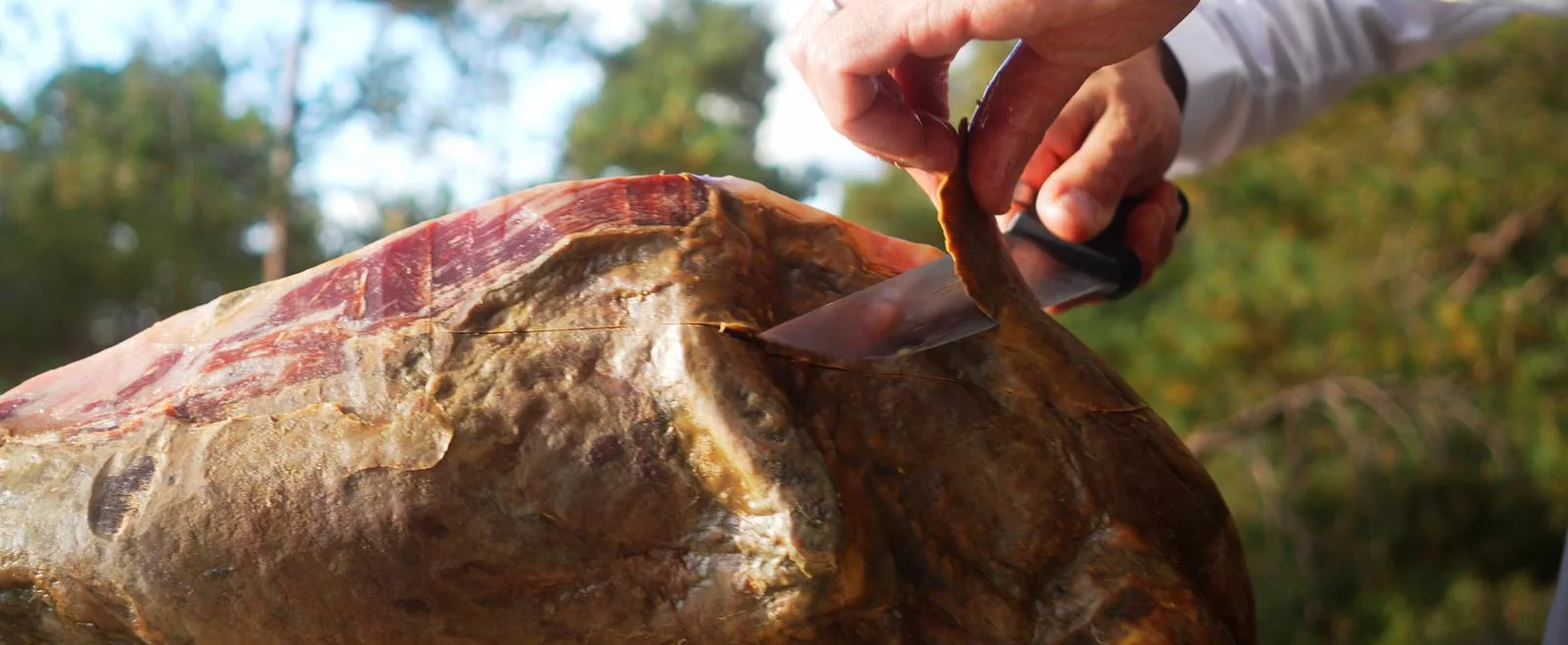
1. Start with how the ham will be used
A whole jamon, a paleta and a sliced pack solve different needs. A whole jamon works when the serving can take centre stage and there is time, suitable storage and someone able to carve it. Paleta comes from the front leg, is smaller and has a different ratio of bone, fat and edible yield. Sliced packs are simpler when portions need to be predictable or served on several smaller occasions.
Decide first whether the ham should be the focus of a service, last over time at home or provide ready portions. Format changes both the experience and the real cost per served slice.
2. Read the full designation, not only the word bellota
The official colour seal provides the first clear distinction. Black indicates bellota from a 100 per cent Iberian pig. Red indicates bellota from a 50 or 75 per cent Iberian pig. Green identifies cebo de campo and white identifies cebo. Breed percentage and feeding category describe different things and should be read together.
The producer and complete product name should also be identifiable on the label. A dark hoof, a long curing time or luxurious language does not replace that information. Read the foundation guide to jamon iberico for the relationship between the categories, or use the label guide for a detailed reading of each seal.
3. Compare jamon with jamon and paleta with paleta
Jamon comes from the hind leg and is usually larger. Paleta comes from the front leg and has a higher proportion of bone relative to its weight. Two products at the same price per kilogram may therefore yield different quantities of slices. Net weight is already clear for sliced packs, while a whole leg requires you to account for bone, rind, fat and your own carving.
This does not mean that one format is always better value. The useful comparison depends on how many people will eat it, over what period and how important the act of carving is to the occasion.
As a practical reference, a whole jamon iberico de bellota weighs 8–9 kg and yields 4–4.5 kg of carved meat. Plan 40–45 g per person at a reception, about 80 guests, or 35–40 people when the ham is the evening’s main feature. Actual planning depends on the format and the individual ham.
4. Understand what the price reflects
Price can reflect breed percentage, feed, animal weight, maturation, producer, origin and whether the product is whole, portioned or sliced. A higher price is not an independent guarantee of quality, but a clearly specified product lets you understand what you are paying for.
Compare products within the same category and format. If one is markedly cheaper than others with a similar designation, check the net weight, whether it is jamon or paleta, the breed percentage and whether the price covers a whole piece or a smaller cut.
5. Check origin and traceability
The producer’s name, official seal and product label matter more than loose claims about “Spanish quality”. A DOP designation can provide additional information about geographic origin and control, but the absence of a DOP does not automatically mean low quality. The underlying Iberico categories are regulated nationally in Spain.
In the guide to recognising quality in jamon iberico, I separate what the seal and label can verify from what can only be assessed after the ham is opened.
For sliced products, the pack should be intact and the use-by or best-before information and storage conditions clear. For a whole piece, establish exactly which product you are buying, its weight and how it should be handled after opening.
6. Account for storage and carving
An unopened sliced pack is straightforward to plan, but it must be stored as stated on the label. A whole jamon needs a stable place away from heat and direct sunlight, as well as regular carving once opened. If it sits for long periods between servings, the cut surface dries and usable yield may fall.
Carving technique also affects value. Thin, even slices create a different texture from thick or irregular pieces. For one larger occasion, professional carving can be part of the service itself; for home use, decide whether you want to learn the process or choose a ready-sliced format.
7. Questions to ask before buying
- Is it jamon from the hind leg or paleta from the front leg?
- What colour is the official seal?
- Which breed percentage and feeding category are stated?
- Who is the producer and what origin is given?
- What is the net weight and a realistic yield for the format?
- How should it be stored before and after opening?
- Is it intended for everyday serving, a gift or a larger occasion?
These answers make the comparison concrete. You can choose by intended use and documented category instead of by packaging language.
Categories and colour seals follow Spain’s official quality standard for Iberian products. Always follow the label and storage instructions for the specific product.
Choosing jamon for an event?
For events in Stockholm, I select, carve and serve one whole jamon iberico on site.
BOOK